Norwegian salmon, raised in the cold, clear waters of Norway, is safe and healthy. Norwegian waters are unique in terms of their low risk of environmental pollution. Furthermore, Norwegian salmon are constantly monitored and strictly controlled. Each year, 12,000 Norwegian salmon ready for export are randomly inspected by the independent National Institute for Nutrition and Seafood (NIFES).
All salmon are supervised by designated veterinarians at both the freshwater and saltwater stages. Antibiotics are rarely used anymore. If used, they are solely prescribed and monitored by veterinarians. Only approved antibiotics are used, with set Maximum Residue Levels (MRL) and given withdrawal times from use to harvest. This ensures that residue levels are below approved limits. Fish are not allowed to be harvested until the withdrawal time is upheld.
It is safe to eat farmed Atlantic salmon and rainbow trout from Norway without freezing. Studies confirm that it is unlikely to find the parasite Anisakis in these species.
Farmed Norwegian salmon and rainbow trout are exclusively fed on heat-treated dry feed, which does not contain any viable parasites. This explains the absence of Anisakis in farmed Norwegian salmon and trout.
The national survey has consistently confirmed the absence of undesirable substances in farmed Norwegian salmon and trout.
The Norwegian Food Safety Authority focuses on companies’ hazard analyses and management measures to ensure safe food. They investigate how companies ensure that food is safe regarding microbiological criteria and regulations for foreign substances.
The main purpose of the Food Law is to ensure the health of consumers. Within the framework of the goals set out in the Food Law, the Norwegian Food Safety Authority must also consider the interests of actors along the entire food production chain, including market access abroad.
All our harvest facilities are HACCP approved. The food safety programs are annually approved by our government. Third-party audits and customer audits confirm the high level of food safety.
Star Seafood has routines to follow up with our suppliers to ensure that their routines and practices secure safe food.
Norwegian salmon, raised in the cold, clear waters of Norway, is safe and healthy. Norwegian waters are unique in regards of low risk of environmental pollution. Further, Norwegian salmon are constantly monitored and strictly controlled. Each year 12,000 Norwegian salmon, which are ready for export, are randomly inspected by the independent National Institute for Nutrition and Seafood (NIFES).
All salmon is having supervision from designated Veterinary, at both fresh-water- and salt-water-stage. Antibiotics are rarely used anymore. If used, then solely pre-scribed and monitored by veterinary. Only approved antibiotics used, with set MRL and given withdrawal time from use to harvest. This to ensure that residue level is below approved levels set. Fish not allowed harvested until withdrawal time is upheld.
It is safe to eat farmed Atlantic salmon and rainbow trout from Norway without freezing. Studies confirms that it is unlikely to find the parasite Anisakis in those species.
Farmed Norwegian salmon and rainbow trout is exclusively fed on heat-treated dry feed, which does not contain any viable parasites. This explains the above status of absence of Anisakis in Farmed Norwegian Salmon and Trout
The national survey has all these years confirmed the absence of undesirables in the farmed Norwegian salmon and trout.
The Norwegian Food Safety Authority focuses on the companies’ hazard analyses and management measures to ensure safe food, they investigate how the companies ensure that the food is safe regarding to the microbiological criteria and regulations for foreign substances.
The main purpose of the Food law is to ensure the health of consumers. Within the framework of the goals set out in the Food low, the Norwegian Food Safety Authority must also consider the interests of the actors along the entire food production chain, including market access abroad.
All our harvest facilities are HACCP approved. The food safety programs are yearly approved by our government. Third part audits and customers audits confirm the high level of food safety.
Star Seafood has routines to follow up our suppliers, to ensure that their routines and practices secure safe food.
To grow one kilo of salmon it requires 1-1,2 kg designated high quality and sustainable feed.
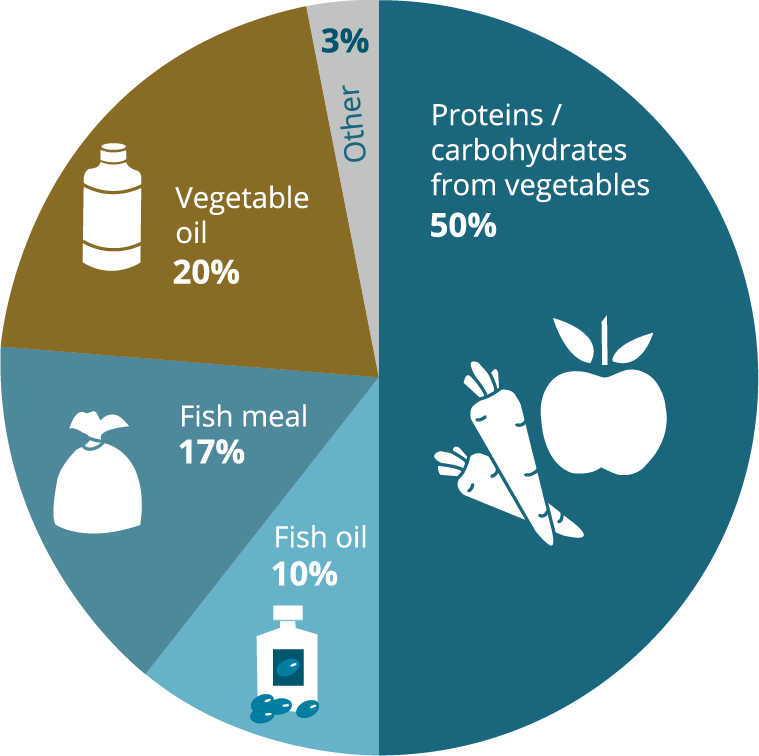
Norwegian Salmon feed consists of fish oil, and fish meal, vegetable oil, vegetable substances as well as proteins and carbohydrates. The marine ingredients derive solely from regulated fisheries. Today approx. 70 per cent of fish feed derives from vegetable sources (grain, vegetable substances, etc.); the rest comes from marine resources (fish oil, fish meal). This contributes to Norway’s very good environmental status, as an effective and innovative part of the food chain. Compared to other large and important food-industries, the feed conversion rate is the very best.